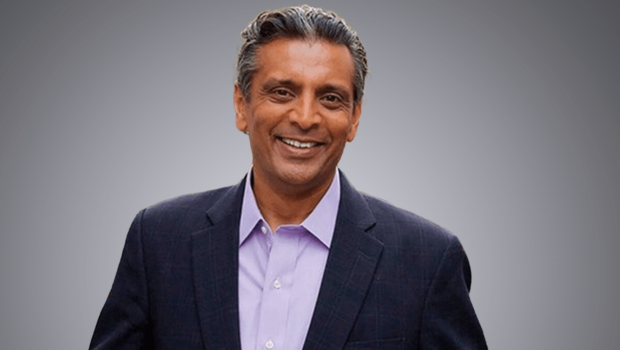
Raj Subramaniam, President and CEO of FedEx Corporation, was born and raised in India, where he completed his undergraduate studies before moving to the United States for graduate education. He joined FedEx in the early 1990s, beginning a career that would keep him within the same organisation for more than three decades. Over those years, he moved through roles in international operations and marketing before rising into strategic leadership positions, accumulating cross-functional knowledge of the company that proved decisive when the board selected him as CEO.
His ascent within FedEx was neither rapid nor accidental. The company’s structure, which historically divided its business among Express, Ground, and Freight units, demanded that senior leaders develop fluency across very different operating models. Subramaniam’s progression through those silos, ultimately to President and Chief Operating Officer before taking the top job, gave him a broad vantage point when FedEx later set out to integrate those units into a single, more coherent network.
Fred Smith founded FedEx in 1971, pioneering the overnight delivery model and building a company whose name became a verb in global commerce. When Subramaniam formally assumed the CEO role in June 2022, with Smith moving to executive chairman, the transition was carefully choreographed: a deliberate handover rather than a sudden departure. Smith’s death in June 2025, at the age of 80, ended that working relationship and deprived Subramaniam of his principal mentor at a moment of considerable strategic complexity.
Fortune, which profiled Subramaniam in depth in August 2026, noted that few successors to founder-CEOs carry a heavier symbolic burden. The task is to honour a legacy while making decisions that the founder never had to face.
What distinguishes Subramaniam’s approach is the degree to which he treats FedEx’s operational data as a strategic instrument. The company generates approximately two petabytes of data every day from its global network. Every parcel scanned and every customs declaration logged feeds into what he regards not merely as logistics data but as a real-time indicator of global economic conditions.
When trade tensions between major powers shift, or when consumer demand in a particular region softens, FedEx’s volumes register the change before most other indicators do. Fortune observed in its 2026 profile that when “the global economy is about to go haywire,” few executives are better positioned to read the early signals than Subramaniam, given the granularity of FedEx’s network.
This analytical orientation shapes his public framing of the present moment in global trade. Where many commentators debate whether globalisation is reversing, Subramaniam argues for a more precise reading, describing current conditions as “reglobalization”: a reconfiguration of supply chains driven by tariff regimes and geopolitical friction, rather than a wholesale retreat from cross-border commerce. In FedEx’s Q4 2026 earnings call, he elaborated on how these forces are reshaping customer demand for time-definite and e-commerce delivery services, and how the company’s network integration programme is designed to respond.
Since taking the reins, Subramaniam has overseen a multi-year effort to consolidate FedEx’s historically separate operating segments. Express, Ground, and Freight, each with its own leadership structure and operating culture, are being merged into a more unified architecture under the internal programme known as “Network 2.0.” The aim is to reduce redundancy and lower unit costs, with the goal of improving operating margins that have historically lagged those of rivals with simpler network designs.
FedEx’s market capitalisation stood at approximately $95 billion as of 2026, according to Fortune, reflecting the scale of the enterprise and ongoing investor scrutiny of whether the integration programme will deliver the expected efficiency gains.
The most revealing detail about Subramaniam’s current position may come from the period following Fred Smith’s death. According to Fortune’s August 2026 profile, Subramaniam spoke candidly about what it meant to lead FedEx without its founder present for the first time. He had, by his own account, relied on Smith not only as a board member but as a sounding board for decisions that touched the company’s core identity. Losing that voice mid-transformation, while simultaneously navigating trade disruption and a complex network integration, compressed several kinds of pressure into a single moment. That convergence, more than any individual strategic choice, illustrates what it means to be the second CEO of an institution built around one man’s founding idea.