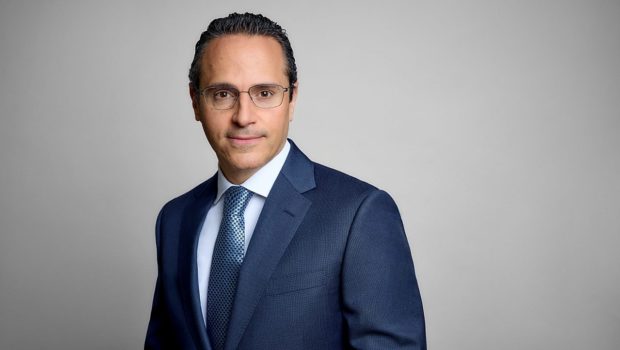
Wael Sawan studied engineering at McGill University in Montreal, where the Faculty of Engineering lists him among its notable alumni, identifying him explicitly as CEO of Shell plc. After graduating, he joined Shell in the late 1990s and built his career across a range of the company’s operational environments. Senior positions in deep-water operations and upstream portfolio management preceded his leadership of Shell’s Integrated Gas, Renewables and Energy Solutions division, which oversees the company’s liquefied natural gas activities alongside its selected low-carbon businesses. That division became a central axis of Shell’s repositioning as a broader energy company over the course of the 2010s.
A Strategic Recalibration Under Scrutiny
Sawan’s appointment as CEO came during a period of sustained pressure on integrated energy majors. Shell has faced legal proceedings related to its climate commitments and demands from investor groups for clearer decarbonisation pathways. Regulatory frameworks across its global footprint add further complexity to capital allocation decisions. Under his leadership, the company has continued distributing capital to shareholders while investing selectively in liquefied natural gas and specific low-carbon projects. In a 2023 strategy update, Shell indicated it would reduce investment in certain renewable energy segments where returns had fallen short. That decision reflected a deliberate concentration of capital in areas where Shell holds operational and commercial advantage, rather than spreading resources across a wide range of emerging technologies.
The “Orderly Transition” Argument
At investor presentations and industry forums, Sawan has articulated what he calls an “orderly” energy transition, one in which oil and gas continue to supply global demand during the prolonged process of building alternative infrastructure at scale. He has argued that an abrupt reduction in hydrocarbon production would risk energy insecurity, particularly in emerging markets where affordable alternatives remain limited. His engineering background appears to inform this framing: the emphasis falls on physical supply realities and infrastructure lead times, rather than on projected demand scenarios.
A Long Way from a Montreal Campus
The McGill Faculty of Engineering‘s inclusion of Sawan among its distinguished alumni offers one of the more telling biographical details available about him. Born in the Middle East and eventually arriving in a bilingual, cosmopolitan Canadian city to study engineering, he was already navigating multiple contexts long before joining Shell. Engineering, as a discipline, imposes hard constraints. Materials behave according to fixed laws, and tolerances admit no creative reinterpretation. In public discussions, Sawan has linked that formation to how he approaches the trade-offs between long-term transition goals and short-term energy realities. Shell employs engineers across six continents. That one of them, starting from a lecture hall in Montreal, arrived at the company’s chief executive role is a detail McGill considers worth commemorating, and the thread that runs through the career of an executive now at the centre of some of the most consequential decisions in global energy.