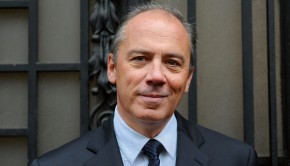
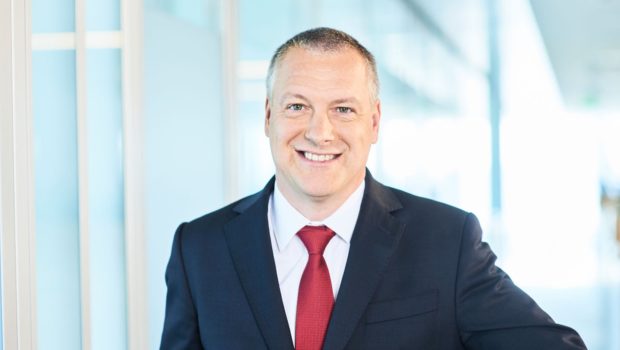
Andreas Schierenbeck, Chief Executive Officer of Hitachi Energy, arrived at the company carrying credentials built across three decades of German industrial leadership. His engineering and business education, documented in German-language professional profiles, shaped an early career at Siemens and Thyssenkrupp, where he managed businesses spanning industrial services and elevator technology. These roles gave him sustained exposure to high-reliability infrastructure: systems where failure carries real consequences and where capital intensity demands planning horizons measured in decades.
His most formative executive role before Hitachi Energy was as Chief Executive Officer of Uniper, the utility spun off from E.ON. Navigating Uniper through volatile commodity markets and the early phases of the European energy transition required him to manage the tension between legacy fossil-fuel assets and a shifting regulatory environment. It was at Uniper that Schierenbeck developed the conviction that energy infrastructure is not simply a commercial proposition but a strategic national asset.
Taking the Helm at Hitachi Energy
Hitachi Energy emerged from the ABB Power Grids business after Hitachi’s acquisition, and Schierenbeck joined as CEO to define the company’s identity in its new form. Business Wire describes the firm as “a worldwide leading company in electrification” with ambitions to meet energy needs over the next 25 years, a framing consistent with the scale of mission he has articulated publicly.
His Bloomberg interview published in October 2026 offers the clearest window into his current thinking. He argues that the electricity infrastructure industry must grow fast enough to support both the AI boom and broad industrial electrification, two demands arriving simultaneously and straining existing grid capacity. In that same conversation, he makes a more pointed claim: electricity networks are increasingly a national security issue, not merely a question of engineering reliability. That reframing has direct consequences for how Hitachi Energy allocates investment, structures partnerships, and engages with governments.
One concrete expression of this approach is the company’s partnership with Rockwell Automation, announced in October 2026, designed to combine power and automation capabilities to accelerate electrification across industrial sectors. The collaboration reflects his view that the next phase of grid development requires integrating electricity infrastructure with digital controls, rather than treating them as separate domains.
A Calculated Bet on Nuclear
Perhaps the most striking aspect of Schierenbeck’s public positioning is his advocacy for small modular reactors. Bloomberg reported in October 2026 that Hitachi Energy is developing SMR technology with partners, with Schierenbeck arguing for reliable, low-carbon baseload power as a long-term cornerstone of energy security. He acknowledges that new nuclear projects can take between five and ten years to build, but presents that timeline as a reason to begin now rather than to hesitate.
The European context adds weight to this argument. Bloomberg’s reporting on the October 2026 EU energy summit notes that price surges and geopolitical tensions have added more than €100 billion to Europe’s fossil-fuel import bill, sharpening the political case for alternatives that combine reliability with low carbon intensity.
The Fukushima Question
The detail that best illuminates Schierenbeck’s approach is his willingness to advocate for nuclear energy despite persistent public sensitivities, particularly in Japan, Hitachi’s home country. Following the Fukushima disaster in 2011, nuclear power became politically fraught across much of the Japanese public, and for a CEO of a company with Japanese ownership, championing SMR development required a deliberate choice to engage with difficult historical memory rather than avoid it.
Bloomberg’s October 2026 coverage reports that Schierenbeck plays down concerns about opposition rooted in Fukushima, making the positive case for nuclear as a necessary component of any credible clean-power strategy. Whether speaking with investors or employees, he has chosen to address that history directly rather than sidestep it. For a German engineer leading a Japanese-owned infrastructure company through one of the most politically sensitive chapters in the nuclear industry’s modern history, that willingness to engage rather than deflect is perhaps the clearest signal of how he leads.