
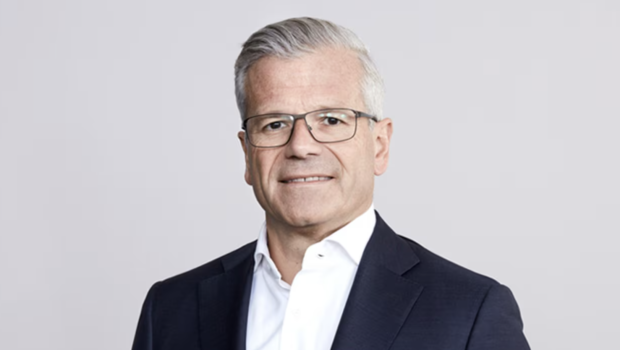
A career built from the inside
Vincent Clerc, chief executive officer of A.P. Moller-Maersk since January 2023, joined the company in 2003, entering a container shipping line that would, over the following two decades, transform itself into a broad logistics group. His early career took him through commercial and operational roles across different geographies, building direct familiarity with how cargo moves from factory gate to distribution centre.
By 2021, Clerc had been appointed chief executive of Maersk Line, the container shipping arm that generates the group’s largest revenue stream. The COVID-19 pandemic had produced extraordinary port congestion, record freight rates and a scramble for container capacity that sent shock waves through global manufacturing and retail. When Søren Skou stepped down at the end of 2022, Maersk’s board chose Clerc to lead the full group.
Remaking the model
The strategic question that now defines Clerc’s tenure is whether Maersk can complete its transition from a carrier of boxes into an integrated logistics operator that accompanies goods from origin to destination. The company has invested in warehousing, air freight, customs brokerage and inland transport, assembling a network of services intended to position it as a comprehensive supply-chain partner for large shippers.
The ambition carries a price in investor patience. Maersk’s shares slid in late 2026 after the company’s upgraded earnings guidance fell short of market expectations, according to Bloomberg. The gap illustrates the difficulty of convincing investors, conditioned to track container rate movements, that a multi-year diversification strategy is worth the near-term earnings pressure. Clerc has argued consistently that the extreme volatility of freight rates, from pandemic-era highs to a sharp subsequent correction, makes the case for revenue diversification more persuasively than any internal presentation.
A reading of global trade
In a Bloomberg newsletter published in November 2026, Clerc set out his interpretation of where world trade stands. His central argument was that globalization continues to advance despite friction at ports and inland junctions that creates the appearance of systemic disruption. He drew a clear line between bottlenecks, which he attributed to uneven infrastructure investment and demand surges, and any genuine structural withdrawal from cross-border commerce. In his view, the two should not be confused.
The distinction matters for how Maersk allocates capital. If the underlying momentum of merchandise trade remains intact, the investment case for end-to-end logistics infrastructure holds even when freight rates are compressed. Critics have pointed to geopolitical fragmentation as a complicating factor; Clerc’s reading, grounded in trade volume data, is that the evidence does not yet support a pessimistic interpretation.
The executive behind the argument
Bloomberg’s coverage of Clerc returns consistently to one theme: his readiness to frame supply-chain debates in structural rather than purely quarterly terms. In discussing where congestion actually occurs, he shifted the focus away from deep-sea lanes toward ports and inland junctions, a perspective shaped by two decades spent inside a company that now spans both shipping and logistics.
There is something revealing about the fact that Clerc, a French executive who spent his entire career inside a Danish conglomerate, became the person Maersk chose to explain to the world why global trade is not broken. It is a role that suits the trajectory: someone who has watched freight markets from the inside through multiple cycles, and who now argues that the box keeps moving even when the headlines say otherwise.