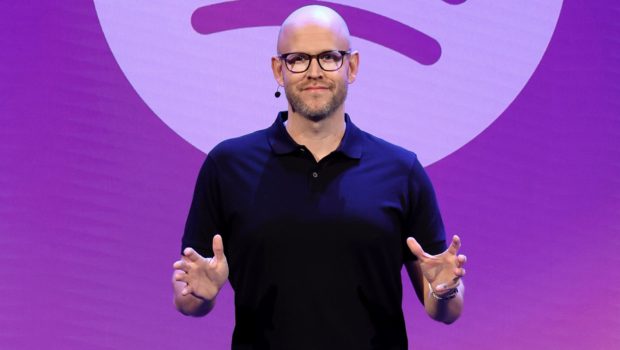
Daniel Ek was raised in Rågsved, a suburb south of Stockholm, and learned to code in his early teens. Before he had finished school, he was running a small web design business, building websites for clients and experimenting with monetisation models. After a brief stint as chief technology officer at Stardoll, a digital fashion community, he channelled his focus into building scalable consumer products.
Spotify, which Ek co-founded with Martin Lorentzon in 2006 and launched publicly in 2008, rested on a precise thesis: the only credible answer to rampant digital music piracy was a legal alternative that was simply better than the pirated version. Instead of asking users to purchase individual tracks, the platform gave instant access to vast catalogues through a freemium model, gradually converting tens of millions of listeners into paying subscribers. Spotify went public on the New York Stock Exchange in April 2018 through a direct listing, a structure that itself broke with convention in a market dominated by traditional IPOs.
Under Ek’s leadership, Spotify expanded beyond music. From around 2019, the company moved aggressively into podcasting, acquiring production studios and signing exclusive agreements with major creators. By the mid-2020s, the platform had grown into a broad audio service with hundreds of millions of monthly active users across more than 180 markets, one of the largest subscription services globally measured by active user base.
The expansion has not been without friction. Persistent questions about royalty structures, algorithmic curation, and the leverage that large platforms hold over music economies have followed Spotify through multiple markets and regulatory environments. Ek has engaged with those debates publicly, consistently framing the platform’s role as building a new distribution infrastructure rather than replacing an old one.
In a move that initially surprised observers accustomed to thinking of Ek as a media-technology executive, he co-founded Neko Health alongside Hjalmar Nilsonne. The company offers full-body scanning services, using advanced imaging and AI to produce detailed maps of a patient’s body with the aim of catching potential illness before symptoms emerge.
According to TechCrunch, Neko Health raised funding of around $65 million for its preventative healthcare model and reached a reported valuation of approximately $1.8 billion in secondary transactions. The company opened its first clinics in Sweden before expanding to London and then into the United States.
The rationale Ek has articulated for entering healthcare is recognisably similar to the one that drove Spotify: he identified a system he believed was underperforming and concluded that technology could offer a faster, more accessible alternative. In public statements, he has described preventative care as a domain where early data can be decisive, and where most people currently receive medical attention only after they are already unwell.
Neko Health’s model draws scepticism from parts of the medical establishment, particularly around the clinical interpretation of anomalies found in asymptomatic patients. Investor confidence, as evidenced by the valuation, has held firm nonetheless.
A detail that recurs across Ek’s public persona is his insistence on time horizons that extend well past a conventional earnings cycle. During Spotify’s early years, negotiating licensing agreements with major record labels required sustained patience with counterparts whose default instinct was scepticism. Ek has reflected publicly that trust in those relationships was accumulated through consistency over years, not through a single dramatic gesture.
The same disposition appears to inform his health venture. In the TechCrunch video documenting Neko Health’s expansion into the United States, the emphasis is on building clinical credibility gradually and scaling capacity in step with what the company can actually deliver well. For someone who built his first commercial website in a Stockholm suburb before most people had a working definition of streaming, the willingness to wait may be the most durable constant across two very different industries.