From Intern to Chief Executive
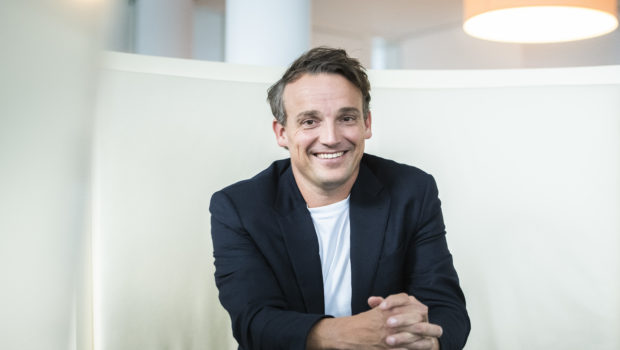
Christian Klein’s connection to SAP predates his professional career by years. He joined the company as an intern at the age of fifteen, navigating the structured interfaces of enterprise systems at a time when ERP software meant rigid, on-premise deployment. Over the decades that followed, he progressed through roles in finance and operations, and later in product management, building a breadth of institutional knowledge that is rarely matched by executives brought in from outside. Before assuming the sole CEO role, he served in a co-CEO arrangement alongside Jennifer Morgan, a period that broadened his exposure to investor relations, board governance, and the pressures of steering a global technology company already under pressure to reinvent its model.
Orchestrating a Seismic Shift
The central act of Klein’s tenure has been SAP’s reorientation away from on-premise enterprise resource planning software towards subscription-based cloud services, integrated data platforms, and embedded artificial intelligence. Fortune characterised the transition as “seismic,” noting that it reshaped both the company’s revenue profile and its identity. Annual recurring cloud revenue has become SAP’s primary financial metric, displacing the licence-based model that defined the company for decades.
Under his leadership, SAP has grouped this transformation around the concept of the “Autonomous Enterprise,” a vision in which intelligence flows continuously across every business function, from supply chain and financial reporting to human resources and customer operations, without requiring manual orchestration at each step. The concept received a public showcase at SAP Connect in October 2026, where Klein presented Joule Work and Joule Assistants as tools already deployed at organisations including Novartis, Nestlé, Morgan Foods, and PwC. He framed the event not as an incremental product release but as the opening of a new chapter in what enterprise software is for.
A Dissenting Voice on AI
Beyond SAP’s own roadmap, Klein has taken a position in the wider debate about artificial intelligence that separates him from many of his peers. In a piece published through SAP’s Swedish newsroom, he argued that the current AI race is heading in the wrong direction, driven too heavily by competition over abstract model benchmarks rather than by the practical question of what AI actually delivers for business users. His alternative framing prioritises reliability, contextual relevance, and measurable improvements in everyday workflows. The stance reflects a long-standing enterprise software tradition of judging technology by operational outcomes rather than raw capability, and it positions him as a pragmatist at a moment when much of the industry is chasing headline performance numbers.
The End of the Keyboard
The detail that most vividly captures Klein’s personal relationship with the future of work comes from Fortune’s coverage of workplace technology trends. He has predicted that the keyboard is on borrowed time as the dominant interface between employees and software, arguing that voice translation and conversational tools will progressively replace text-based inputs, particularly for workers who have never been fully at ease with traditional digital interfaces. Coming from someone who first encountered enterprise systems as a fifteen-year-old intern, in a world of command lines and structured data entry forms, the observation carries a particular resonance. His career arc, from that first internship to the SAP Connect stage, mirrors the evolution of business software itself: from structured command to intelligent conversation, compressed into a single professional lifetime.