From Software to Stewardship
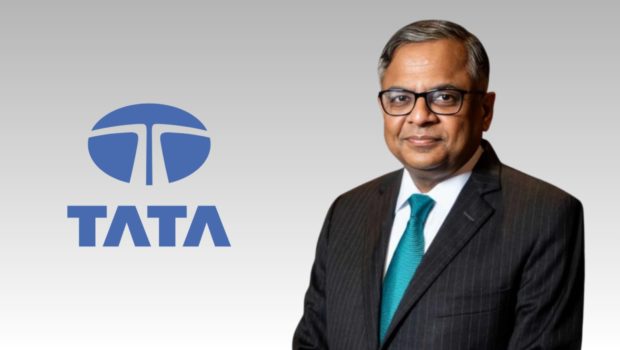
Natarajan Chandrasekaran’s route to the pinnacle of Indian corporate life began not in a boardroom but in front of a computer screen. He joined Tata Consultancy Services in 1987 after graduating with a degree in applied sciences from the Regional Engineering College in Trichy, Tamil Nadu, and built his career methodically through project management and client delivery roles. By the time he was appointed CEO and managing director of TCS in 2009, he had spent more than two decades shaping the company’s global delivery model, helping transform it from a domestic IT firm into one of the world’s largest technology services companies by market capitalisation.
His tenure at TCS coincided with a period of sustained growth for the Indian IT sector. The company expanded its headcount, deepened relationships with multinational clients, and diversified into consulting and digital transformation. This operational experience gave Chandrasekaran a perspective that few conglomerate chairs possess: an intimate understanding of how large technology-driven organisations scale across geographies.
A Different Kind of Chairman
The move from leading a technology services firm to chairing one of the world’s largest conglomerates is rarely straightforward. In January 2017, Chandrasekaran was appointed executive chairman of Tata Sons, the principal holding company of the Tata Group. The appointment came after a period of internal turbulence, following the abrupt departure of Cyrus Mistry as chairman in late 2016, and it signalled a deliberate choice by the Tata Trusts to elevate someone from within the group’s own ecosystem rather than seek an outside candidate.
Under his chairmanship, Tata Sons has pursued portfolio rationalisation and cross-sector coordination across a group whose interests span Jaguar Land Rover in the United Kingdom, Tata Steel, Tata Motors, Tata Power, and TCS itself. For European readers, Jaguar Land Rover has been the most visible indicator of his stewardship, given the British manufacturer’s employment footprint and its weight in Tata Group’s international revenues.
Air India: A Return to Tata Roots
In March 2022, Chandrasekaran assumed the chairmanship of Air India following Tata Sons’ acquisition of the airline from the Indian government, ending decades of state ownership and returning it to the group that originally created it. The airline was founded by J.R.D. Tata in 1932 before its nationalisation in 1953. As chairman, Chandrasekaran provides strategic direction and governance oversight, while day-to-day operational leadership was entrusted to Campbell Wilson, appointed chief executive officer and managing director in May 2022.
The Air India transformation has involved fleet renewal negotiations with Boeing and Airbus, alongside cabin refurbishments and a sustained effort to rebuild the carrier’s reputation for service quality. These are capital-intensive commitments that reflect the scale of Tata’s ambition for the airline and the pressure on Chandrasekaran to deliver tangible results on one of India’s most symbolically charged assets.
Governance Under Pressure
In August 2026, Bloomberg reported that Chandrasekaran had been weighing an exit from the Tata Sons chairmanship ahead of a potentially contentious annual general meeting, with uncertainty over how the Tata Trusts, the controlling shareholder, would vote. The report illuminated the intricate governance architecture of the Tata Group, where formal corporate structures interact with the priorities of charitable trusts holding the majority stake. This interplay between institutional design and personal leadership decisions at the top of one of the world’s largest family-linked conglomerates is rarely visible to outside observers.
Whether or not those deliberations lead to a leadership transition, they place in sharper relief the weight of the role Chandrasekaran has held since 2017: not simply managing a portfolio of businesses, but navigating the expectations of a governance structure with few equivalents in global corporate life.
The Coder Who Runs a Century-Old Empire
Those who have followed Chandrasekaran’s career describe a leader whose instincts remain those of an engineer. He is known for engaging directly with technical teams well beyond what the job title demands. His personal commitment to long-distance running, including completing multiple marathons, has been noted by colleagues and journalists over the years as a reflection of his methodical, endurance-oriented approach to complex problems.
That image, of a man who ran marathons and still thought in code while chairing a group with revenues stretching across continents and a history predating Indian independence, captures something essential about why his tenure at Tata Sons remains one of the more distinctive corporate stories of this decade.