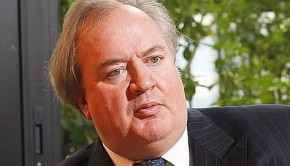
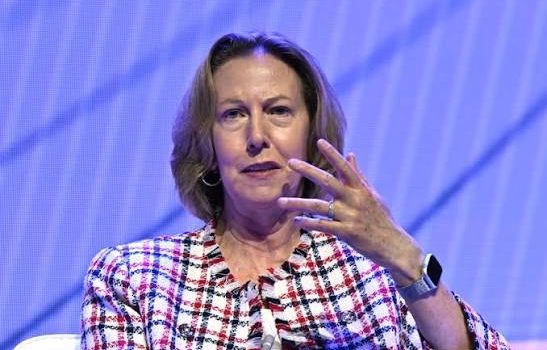
Meg O’Neill built her career across major energy companies in both North America and Asia-Pacific, taking on progressively senior roles in operations and project management before moving into corporate strategy. This grounding in field-level and operational work gives her a different vantage point than executives who rose primarily through finance: she knows the infrastructure she is now responsible for. Her appointment as CEO of BP followed an internal ascent at the company that reflected its deliberate approach to succession planning.
O’Neill’s appointment at BP is significant not only as a personal milestone. She leads the only major oil firm with women simultaneously holding both the CEO and Chief Financial Officer roles. Kate Thomson was appointed CFO in February 2024, initially in an interim capacity, and became the first woman to hold that position in BP’s history. Together, they oversee capital allocation and strategic direction at a company whose decisions reverberate across energy markets and national economies worldwide.
BP’s position in the Fortune 500 Europe makes this pairing notable. The company ranks fourth by revenue in the continent’s most recent edition of the list. Within the top ten, it is the only company led by a woman. In the top fifty, only Engie, the French utility led by Catherine MacGregor, joins it as a woman-led firm. Fortune’s latest count recorded 43 female CEOs across the full 500, representing 8.6% of companies, up from 8.2% the year before. O’Neill’s position at the top of BP stands apart even within that modest cohort. Fortune’s Most Powerful Women ranking placed her sixteenth globally.
O’Neill takes up the CEO role at a moment of considerable strategic pressure. BP has faced scrutiny over the pace and credibility of its energy transition commitments, balancing continued investment in oil and gas with moves toward lower-carbon technologies. Her background in operations is likely to inform how she communicates the practical and financial trade-offs of these choices to institutional investors and the governments where BP holds significant assets. Her exposure to multiple regulatory environments across North America and Asia-Pacific brings a range of national energy policy contexts to her decision-making.
The detail that may define the early narrative of O’Neill’s tenure is the straightforward fact of her situation. No woman had previously led any of the five oil supermajors. There was no internal tradition of female leadership at this level to draw on, no predecessor in the role whose path could serve as a reference. She stepped into a position that had been held exclusively by men since BP’s founding, in an industry where the social architecture of leadership, from technical field work to boardroom culture, had been shaped around male occupancy for most of its history.
What makes the story more than a personal achievement is the concurrent appointment of Kate Thomson. O’Neill did not arrive at BP’s top position alone. From the outset of her tenure, she worked alongside a CFO who was also making history in the same company at the same time. Two women signing off together on the finances and strategic direction of one of Europe’s largest corporations: that image is already a fixed point in the record of the energy industry, whatever the strategic outcomes of their shared tenure prove to be.