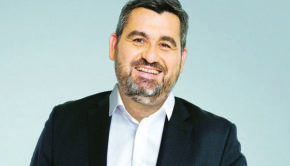
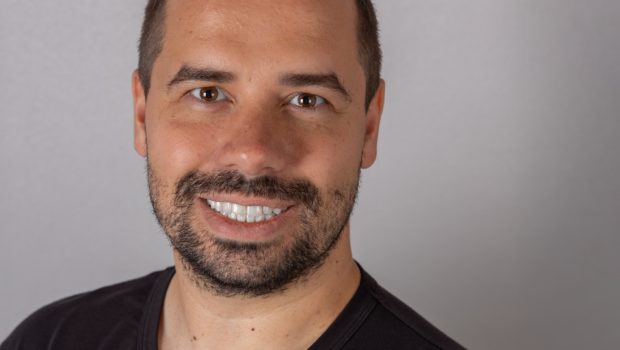
Exein was founded in Rome in 2018 by Gianni Cuozzo, the company’s founder and chief executive officer, alongside Gerardo Gagliardo, chief financial officer and co-founder, and Giovanni Alberto Falcione, chief technology officer and co-founder. From its earliest days, the company took a different approach from most of the cybersecurity industry: rather than wrapping devices in external network defenses, Exein embedded security directly into firmware and operating systems, working at the kernel level. This required close partnerships with original equipment manufacturers and silicon vendors, a strategy noted by TechCrunch in its September 2026 coverage of the company.
As AI capabilities migrated out of data centers and into industrial robots, vehicles and other embedded systems, Exein was already positioned at the device level where that migration was heading. The company’s latest product, Photon, is a runtime security solution that detects and prevents attacks at the kernel of a device, without depending on network connectivity or external management infrastructure.
The Logic of Machine-Time Defense
In the Business Wire announcement of Exein’s September 2026 funding round, Cuozzo stated: “Frontier models are pushing the patch window to zero. Attacks now happen at machine speed, so defense has to as well. Physical AI is the natural next step for Exein: we’re building machine-time security for machine-time attacks.”
In a world where AI systems make decisions in milliseconds, the window for a human to intervene between a vulnerability and a breach has effectively closed. Traditional patch cycles, which can take days or weeks, no longer provide adequate protection for embedded autonomous systems. This is not only a product argument but a reframing of the cybersecurity problem for an era when machine intelligence lives inside physical objects that act in the world.
International Growth from a Roman Base
Since its founding, Exein has expanded from Italy to cover operations across Europe, Asia-Pacific and the United States, according to Business Wire’s September 2026 announcement. That footprint involved navigating divergent industrial cultures: European automotive and equipment manufacturers, Asia-Pacific electronics producers and US technology partners each impose distinct certification requirements and procurement processes.
One of Exein’s backers described the team’s approach in the same release as choosing consistently “the harder, long-term-oriented path” and placing customer trust above short-term opportunities. That characterization aligns with the foundational architecture choice Cuozzo made in 2018: deep integration with manufacturers, rather than the faster-to-market route of external add-on security.
A Founding Conviction on Display
There is a detail in how Cuozzo talks about Exein that reveals something about how he arrived at it. He does not describe the company’s purpose in terms of market size or competitive positioning. He describes it in terms of what happens physically when an attack outpaces a defender. “Attacks now happen at machine speed, so defense has to as well,” he told Business Wire in September 2026. The framing is not commercial. It suggests a founder who spent time examining a technical reality until he understood what it demanded, rather than one who identified a gap and reverse-engineered a product.