From St. Gallen to Stuttgart
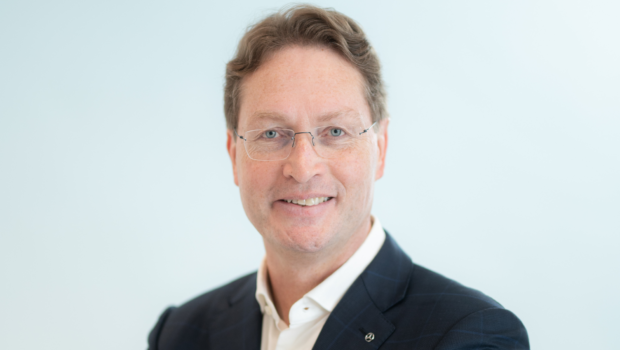
Born in Sweden, Källenius studied business and finance at the University of St. Gallen in Switzerland, one of Europe’s most respected management schools. His academic formation was notably different from the engineering-heavy profiles that had long defined the upper ranks of German automotive leadership. He joined Daimler, Mercedes-Benz’s former parent company, in the early 1990s as a trainee, entering an organisation that had rarely looked outside Germany for its senior figures.
That outsider perspective did not slow his progression. He worked through engine development, then moved into the performance vehicle segment, eventually becoming head of Mercedes-AMG, the high-performance sub-brand where engineering identity intersects with premium branding and global aspirational appeal. The role required him to manage both technical teams and commercial outcomes, sharpening his understanding of how heritage and product emotion translate into pricing power.
A Portfolio of Decisions
After Mercedes-AMG, Källenius took charge of Mercedes-Benz Cars marketing and sales, gaining direct exposure to demand patterns across the company’s most profitable segments, notably in China and the United States. He subsequently joined the board of management with responsibility for research and development, placing him at the centre of the group’s push into electric drivetrains and connected vehicle architectures.
His appointment as CEO of Daimler AG in 2019, and his subsequent leadership of the standalone Mercedes-Benz Group AG after the spin-off of Daimler Truck, followed from this trajectory. The corporate restructuring concentrated the business on passenger cars and vans, giving Källenius a sharper mandate over a more coherent portfolio. Under his leadership, the company shifted deliberately toward higher-margin vehicles, scaling back volume at the entry-level end and investing in electrification and software-driven services.
China: The Test of Adaptation
The most visible current challenge is China. Mercedes-Benz generates a substantial portion of its revenues there, and demand for luxury vehicles has softened more sharply than the company projected. Bloomberg reported in late 2026 that Mercedes was preparing a broader overhaul of its China strategy, with Källenius publicly acknowledging that conditions were “deteriorating beyond what we had thought would happen this year.” The statement is notable for its directness: few industrial CEOs of his stature will say on record that reality has outpaced their own forecasts.
The planned overhaul involves a rethink of pricing and distribution in a market where local electric vehicle manufacturers have moved quickly to offer competitive alternatives at lower price points. Källenius’s response reflects the analytical discipline visible throughout his career: accept the data and revise the assumptions.
The Candour of a Scandinavian in Stuttgart
Beyond strategy, there is a human detail that says a great deal about how the company has changed. For most of its corporate history, Mercedes-Benz was led by German engineers and managers who embodied the values associated with German industrial tradition: long-term consensus and meticulous precision. Källenius, shaped by Scandinavian professional culture and a Swiss academic formation at St. Gallen, operates differently. Observers who have followed his career describe a style that is measured and evidence-based, less focused on formal hierarchy than on structured argument and factual correction.
That cultural influence became visible in late 2026 when he openly acknowledged that the China slowdown had gone further than internal models predicted. In a corporate tradition not always known for such candour, the admission was striking. Whether it signals a lasting shift in how Mercedes-Benz communicates with shareholders and the public, or simply reflects the weight of an unusually difficult market moment, it illuminates what sets Källenius apart from the long line of executives who held the job before him.