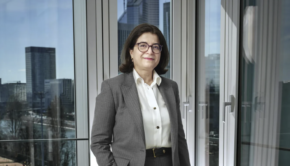
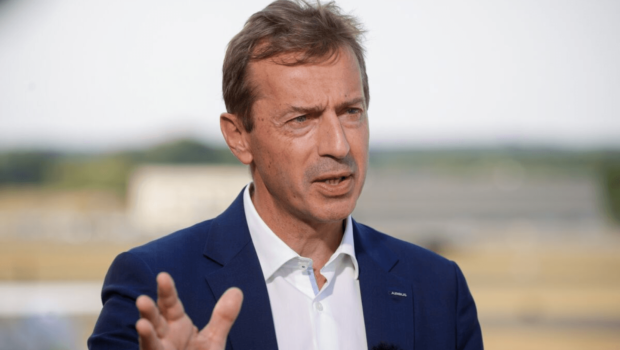
Guillaume Faury’s path to the top of Airbus SE began not in aviation but in the automotive industry. After graduating from France’s École Polytechnique and then from the École nationale supérieure de l’aéronautique et de l’espace (ISAE-SUPAERO), he joined Peugeot’s engineering teams, where he absorbed the rhythms of high-volume manufacturing and the unforgiving logic of industrial scale. That detour into cars proved formative. When he crossed into aerospace by joining Eurocopter, the helicopter subsidiary of what was then EADS, he brought with him a calibrated sense of production economics that would prove useful in a division where each unit is a highly customised, safety-critical machine delivered to demanding clients.
Building Credibility Across Divisions
Faury rose to become Chief Executive Officer of Eurocopter, later rebranded Airbus Helicopters, a role that placed him at the head of a business serving civil and military customers across more than a hundred countries. Helicopters are a different commercial proposition from commercial jets: smaller volumes, more direct relationships with state clients, and engineering constraints driven as much by regulatory bodies as by market demand. Managing that complexity prepared him for a larger move within the group. In 2018, he was appointed President of Airbus Commercial Aircraft, the division that accounts for the bulk of the group’s revenues and employs tens of thousands of people across facilities in Toulouse, Hamburg, Seville, and Tianjin.
When Tom Enders stepped down in April 2019, Faury succeeded him as Chief Executive Officer of Airbus SE. He took over a company listed on the Paris and Frankfurt stock exchanges and on multiple Spanish exchanges, including Bolsa de Madrid, and included in the EURO STOXX 50 index, one of the benchmarks that defines Europe’s blue-chip equity landscape. René Obermann serves as Chairman alongside him, within a governance structure designed to balance the group’s multinational shareholder base.
Crisis, Ramp-Up, and Industrial Pressure
The timing of Faury’s promotion placed him inside a convergence of pressures that would have tested any industrial leader. The Boeing 737 MAX groundings beginning in 2019 created sudden competitive opportunities for Airbus, but also raised immediate questions about how fast the company could increase production of its A320 family without compromising quality or delivery schedules. Within months, the COVID-19 pandemic collapsed global air travel and forced Airbus to cut production rates sharply and reduce headcount, reversing expansion plans that had only just been set in motion. When demand rebounded from 2021 onwards, supply chains that feed Airbus’s final assembly lines, particularly engine and aerostructure suppliers, could not keep pace, exposing deep vulnerabilities across a network of hundreds of European and international partners.
Faury’s response combined direct communication with airlines and investors about revised delivery timelines with sustained internal pressure on suppliers to accelerate output. His engineering background allowed him to engage technically with the root causes of bottlenecks, rather than relying solely on commercial arguments.
The Hydrogen Bet
Beyond crisis management, Faury has staked a significant part of Airbus’s long-term identity on the decarbonisation of commercial aviation. The company’s ZEROe programme, unveiled in 2020, presented three hydrogen-powered aircraft concepts targeting entry into service around 2035. At industry forums and investor presentations, Faury has consistently described decarbonisation as an engineering challenge capable of reshaping the entire sector, positioning Airbus as a committed first mover at a time when several US and Asian competitors have been slower to commit publicly to hydrogen propulsion. Sustainable aviation fuel remains a parallel priority, with Airbus working alongside airlines and fuel producers to scale supply chains ahead of forthcoming regulatory mandates in Europe.
Close to the Metal
Those who have observed Faury’s leadership style describe a consistent and deliberate habit: a preference for time in factories rather than conference rooms. At Airbus’s sprawling assembly facilities in Toulouse, he has been known to walk production lines and engage directly with assembly teams, asking technical questions that his engineering training equips him to ask meaningfully. Former colleagues and industry observers have noted that this accessibility to shop-floor workers coexists with an ability to translate the same issues into the language of capital allocation and regulatory strategy when the audience shifts to investors or policymakers. For Faury, the aircraft is still the object around which everything else organises itself.